“He left the indolence of this coast for the shade and depth of the tropical forest, where his most beautiful cocoa trees grow “
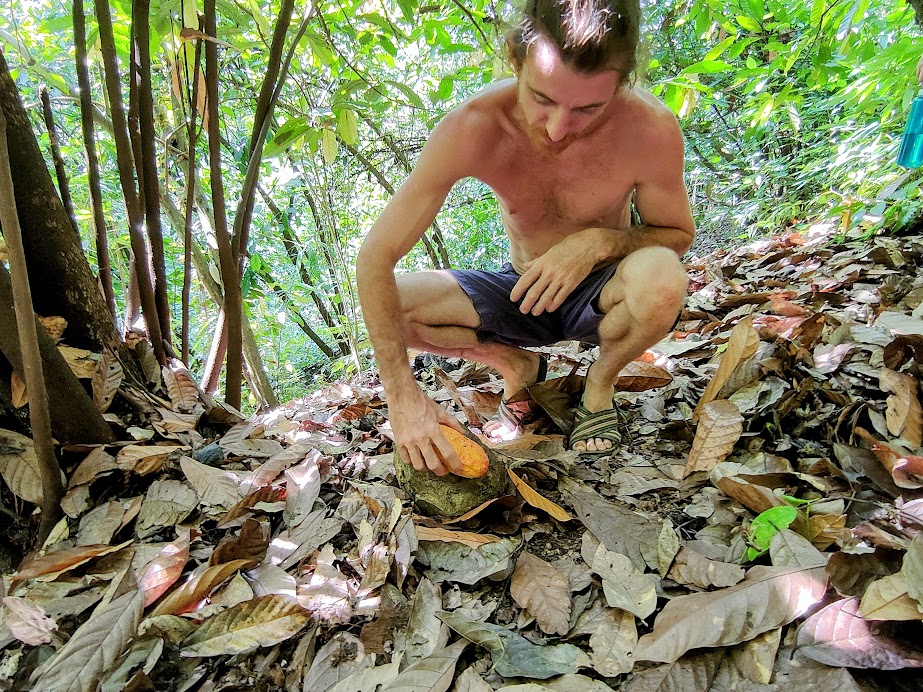
He’s free, Paul! He extracts the best chocolate from his pods
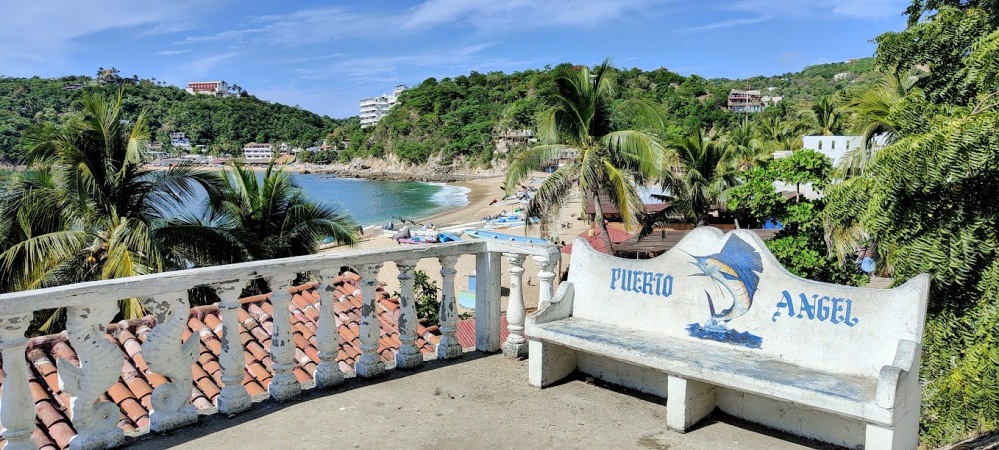
You’d think he was French! He has the look and the language. Yet here, between the Sierra Madre del Sur and the Pacific, near the big town of Pochutla (Oaxaca state), he’s known as the Arab. But for those close to him, he is Pablo, the Pablo of Arroyo Cruz in Puerto Angel. Paul was born in Egypt. The hazards of life (and God knows how much he’s travelled!) landed him here, on this paradise coast. So, by dint of wandering from one beach to another, between La Boquilla, Puerto Angel, Zipolite, Mazunte, etc. (mythical names for generations of backpackers), he tried his hand at all sorts of jobs. Before turning to chocolate, he worked in a hotel-restaurant in La Boquilla, as a real estate agent in Zipolite, and so on. He is also married to a woman from Arroyo Cruz. He has an 11-year-old son. So this is his home.

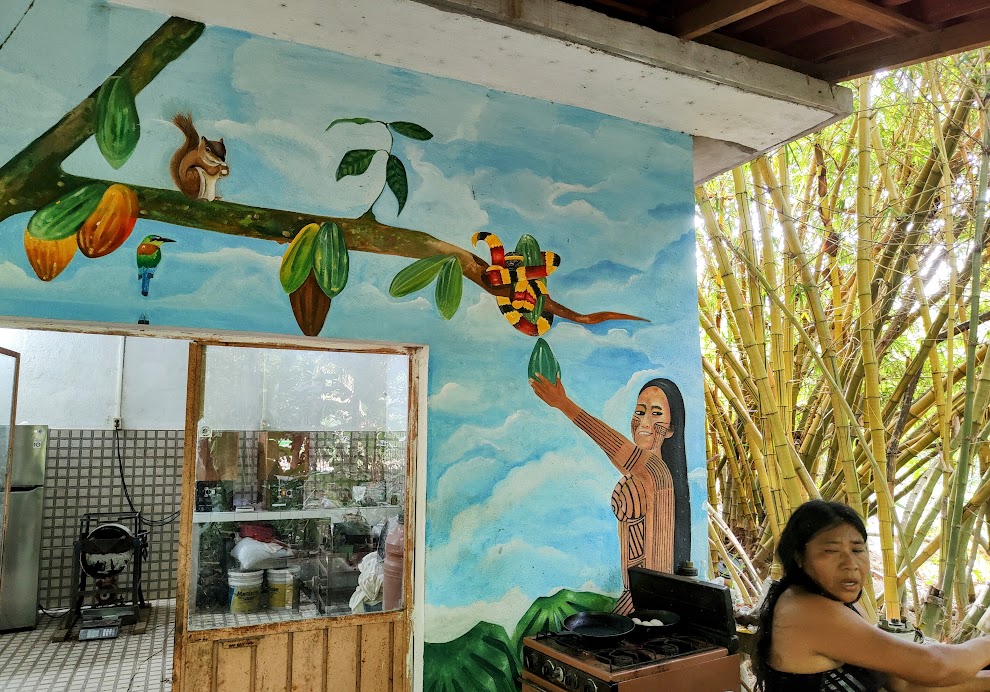
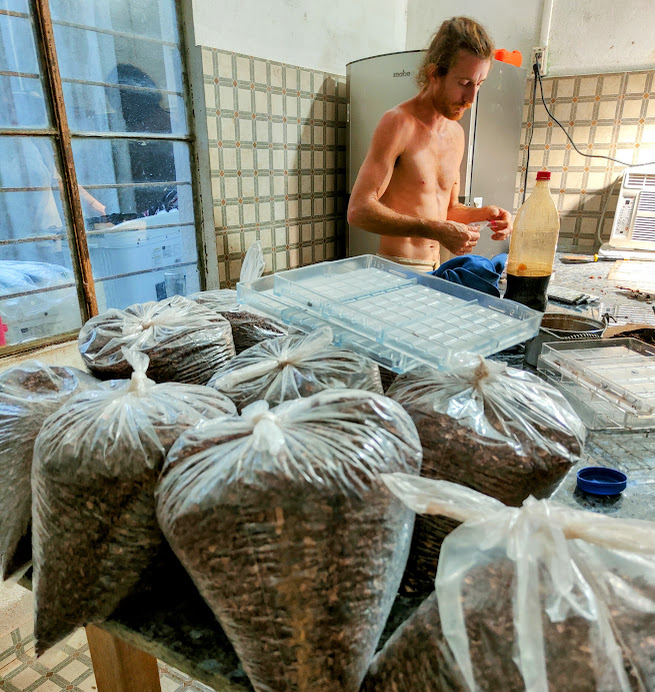
His chocolateria a stone’s throw from heavenly beaches

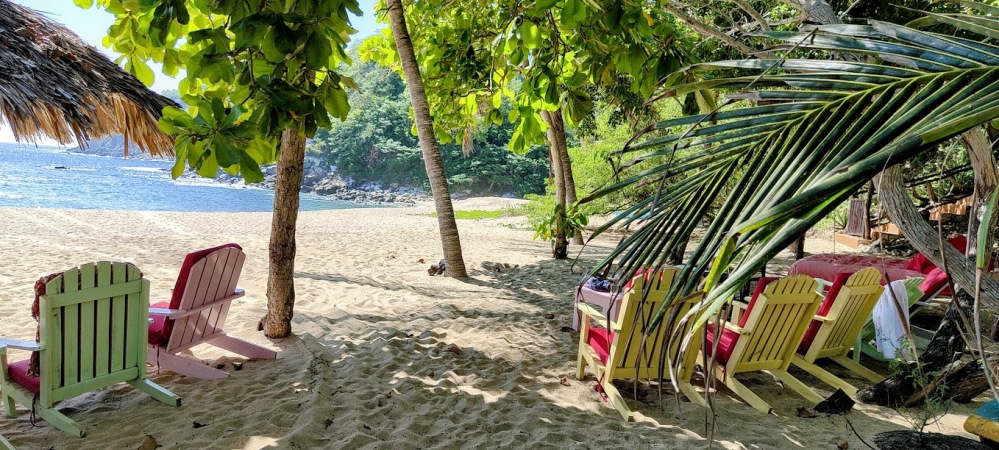

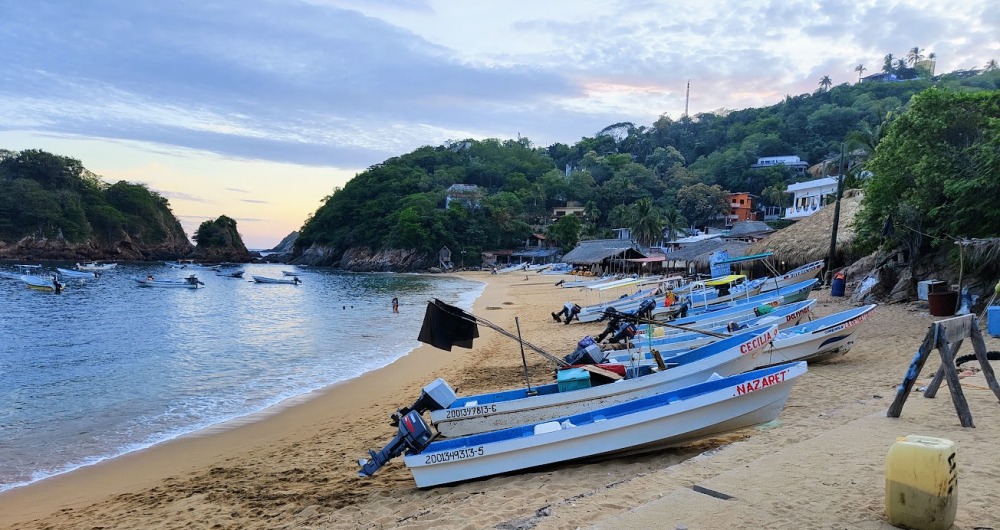
To meet Pablo
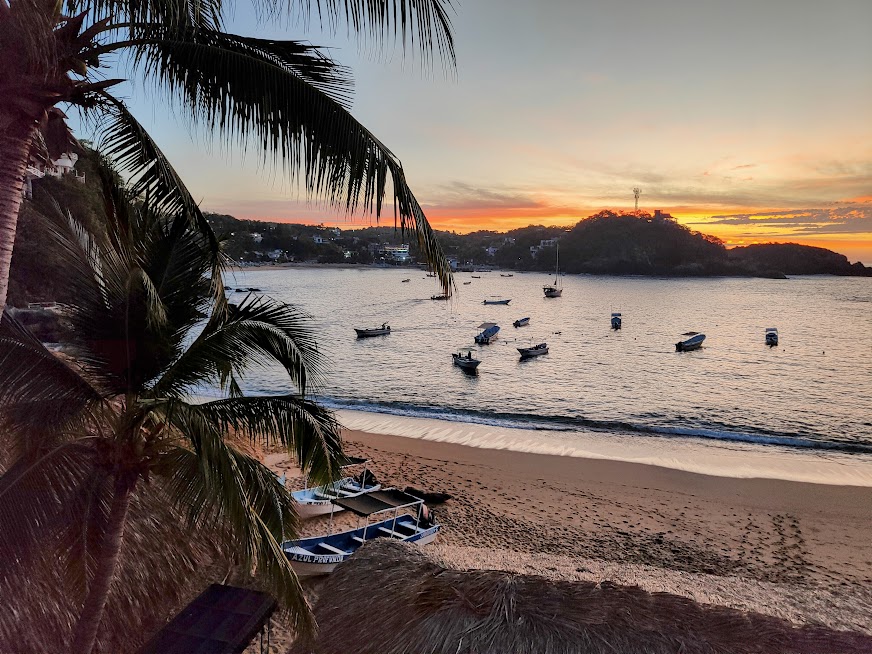
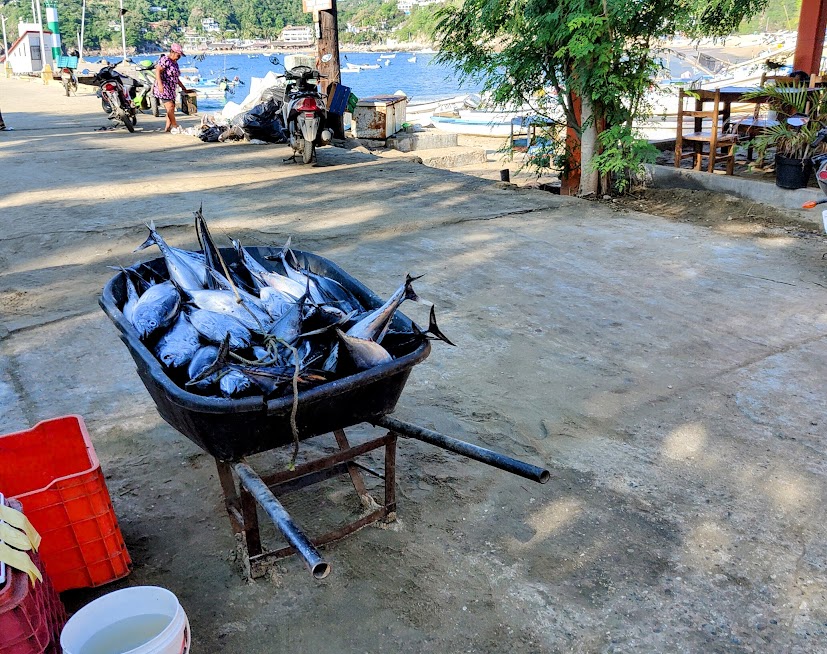
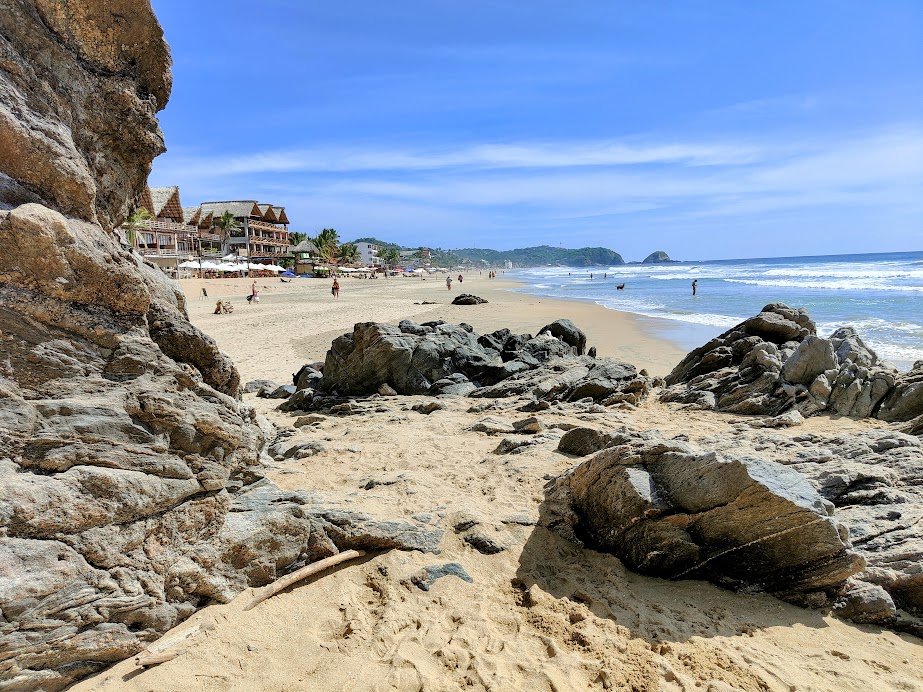
It’s easy to meet Pablo and his chocolate factory! From Puerto Angel and its fishing port, which looks like a pre-war Saint-Tropez, take the road up to Pochutla (San Pedro Pochutla, State of Oaxaca). No problem at all! Taxis or colectivos will drop you off in 10 minutes. Arroyo Cruz is down below, at the junction of the dirt road leading to the Boquilla, with its heavenly beach and dream hotel at the end of the world (Bahia de la Luna).
Arroyo Cruz, a green oasis lost among bamboo and banana trees
Pablo’s chocolate factory in Arroyo Cruz?
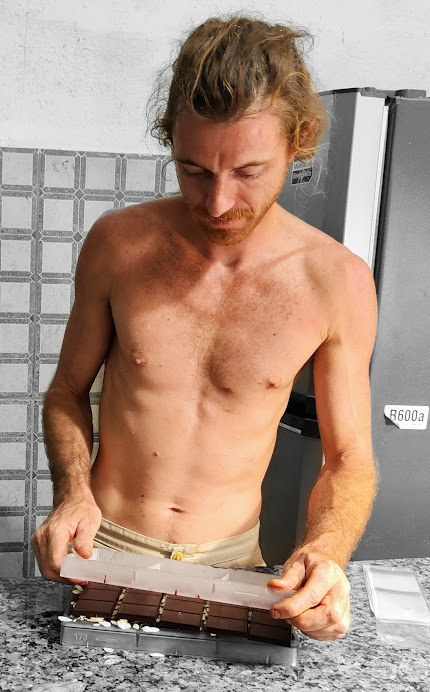
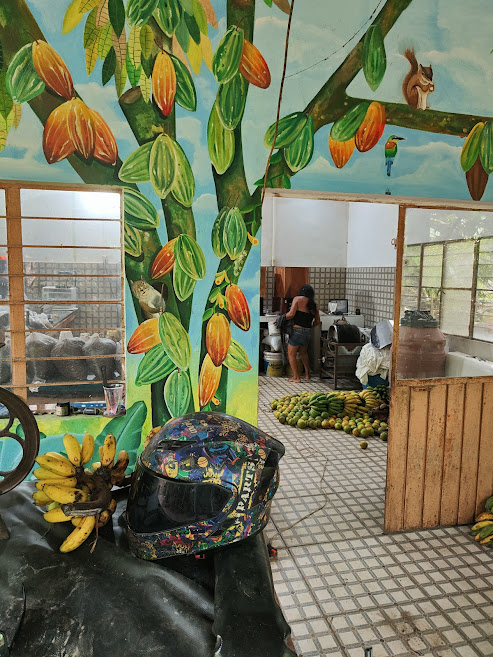
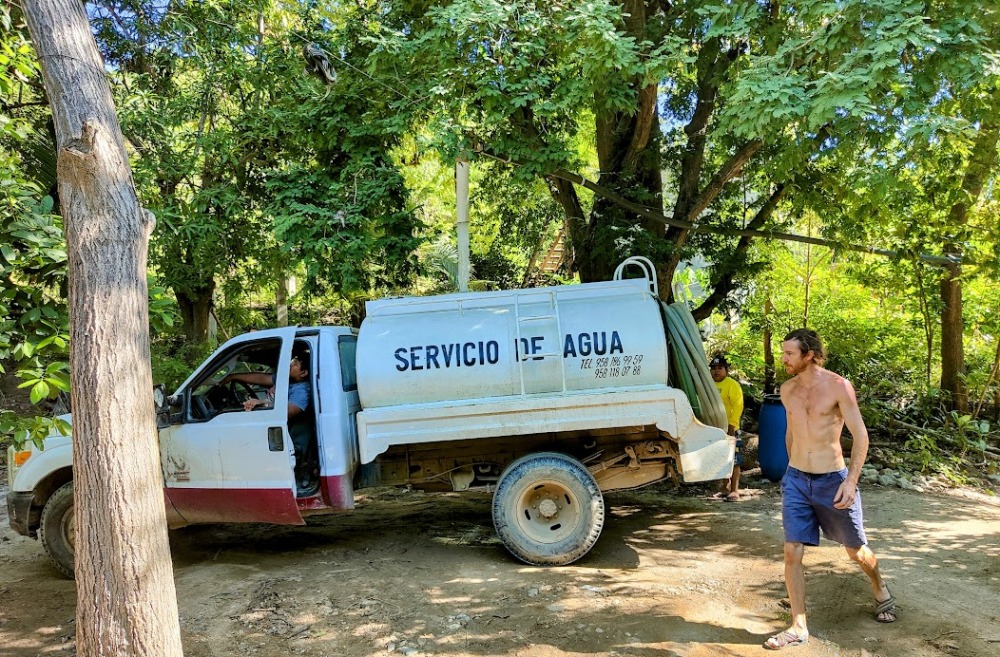
It’s a small, isolated building surrounded by bamboo and banana trees, an oasis of greenery dotted with springs and crossed by an arroyo (stream bed). It was not long ago that women came here to wash their clothes. For Pablo, water is also a source of income (it is used to supply the inhabitants of Puerto Angel)*. Don’t miss the sandy path lined with a makeshift sign reading “Chocolateria Pulque de Cacao”. So welcome to Pablo’s, just 3 km from La Boquilla beach, at the end of an exhausting track in the heat of a late December afternoon; rock, dust, a bad rollercoaster. Paul is there, one eye on his conching (maturing) machine, the other on the bench where the last of his tablets are cooling. His (surprisingly friendly) dogs have warned him of our arrival.
*For a time, he worked in the construction industry, in particular as a well-digger.
The scent of hot chocolate
What can we say? The ‘cool’ side of his welcome or the smell of hot chocolate mixed with the less legal (!) smell of cannabis. This room serves as his laboratory. Not only are the cocoa beans stored here, but in one corner there are bunches of bananas, including the pink ones (the best, tastiest and most nutritious). What a character! His thinness is accentuated by his ‘minimalist’ outfit (just shorts); his almost poetic, philosophical, scientific and completely organic approach to growing cocoa. Yes, a cool baba who plunged into chocolate to save himself from a hazardous life in the more or less gloomy coastal business. As a warm welcome, you can taste his ‘pulque de cacao’ (cocoa pulp) hardly alcoholized (a delicately fruity taste) and just before leaving, biting into the grail, one of the best chocolates I’ve ever tasted. A taste shock! We say goodbye. It’s starting to get dark. We leave with an appointment for the following Wednesday at 10am: “I’m not waiting”, he says with a smiling grin.
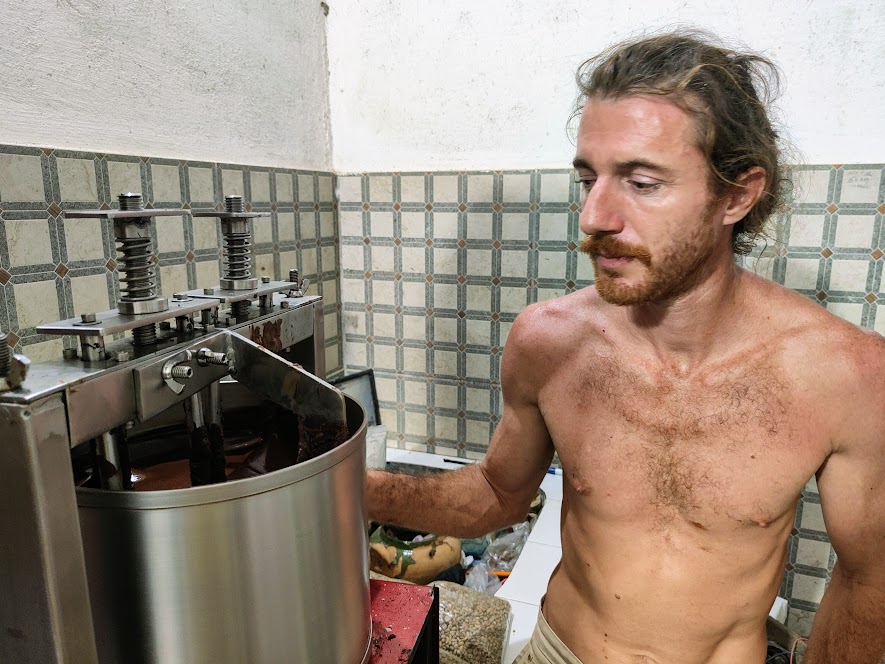
A bit of a botanist, a bit of a chemist
A bit of a botanist, a bit of a chemist! This tall young man, strikingly thin but with Herculean strength, a strong character and absolutely fearless (but not blameless!), has discovered his secret: “Bean-to-bar” chocolate (from the bean to the bar, since he works directly on his cocoa beans to transform them). Make no mistake, he is a chocolate magician. In just a few years, he has empirically discovered (by researching), reinvented and rethought everything. A good Cartesian, a good scientist, he has planted, experimented and tried.
Could he be a chocolate magician?
When he makes his surprising chocolate, he knows that he’s overturning many codes. He shapes it like no other: dark chocolate up to 93% cocoa, totally organic, no additives, very little cocoa butter (5% or less), a hint of vanilla. A real delight! Its brand: Chocolateria Virginia. A very, very small production distributed by hand in a few shops in Mazunte and Huatulco. He also sells surplus beans and cocoa butter. In addition, he earns income from the coffee beans that also come from his finca.
From fermentation to drying
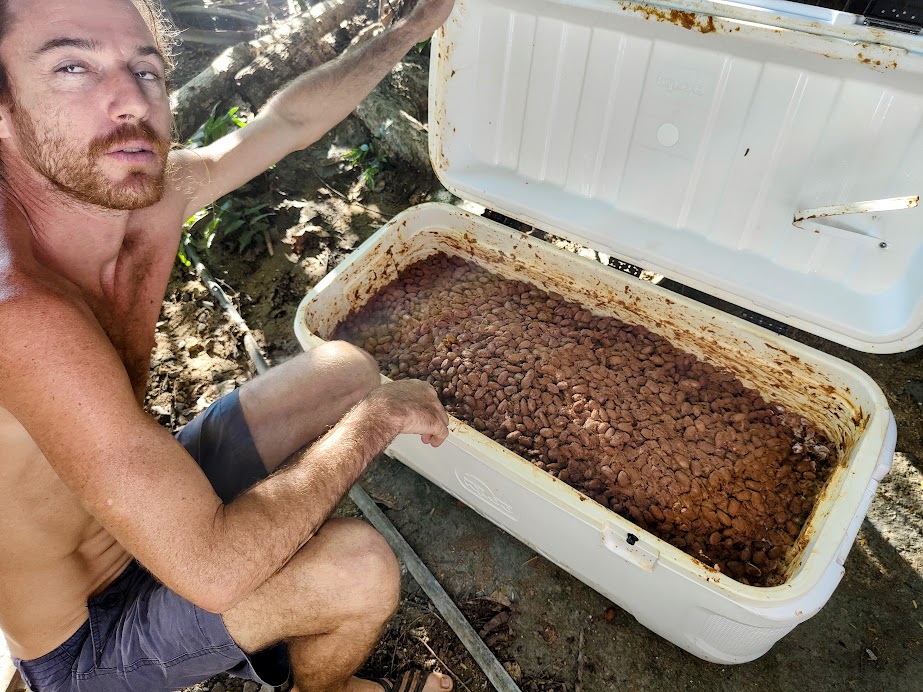
Barrels and fermentation vats
Everything happens around the chocolateria. Fermentation barrels with the faint sour smell of fermenting cocoa are everywhere. At Paul’s, the spontaneous fermentation of the cocoa beans occurs naturally, without the addition of any external micro-organisms. It’s an essential stage that takes place just after the pods from his finca are harvested. The cocoa beans, wrapped in their sweet pulp, are extracted at the foot of the trees and then placed in fermentation vats and barrels at Arroyo Cruz. Fermentation takes place anaerobically, i.e. without oxygen (the barrels are hermetically sealed) for around 6 to 7 days*. But for Paul, the nec plus ultra is to transfer the fermenting beans from the barrels to smaller containers (used to transport the poison). For him, there’s no doubt that the fermentation process is much better.
*You have to trust the appearance, the smell of the cocoa mass and the drop in temperature,” he says. And then there’s experience!

Different fermentations depending on the variety of cocoa
Criollo cocoa beans, for example, are known for their delicate flavour profile and are often fermented for a shorter period than other cocoa varieties. Forastero cocoa beans, on the other hand, are generally fermented for a longer period and are known for their robust flavour and higher levels of bitterness.
Drying
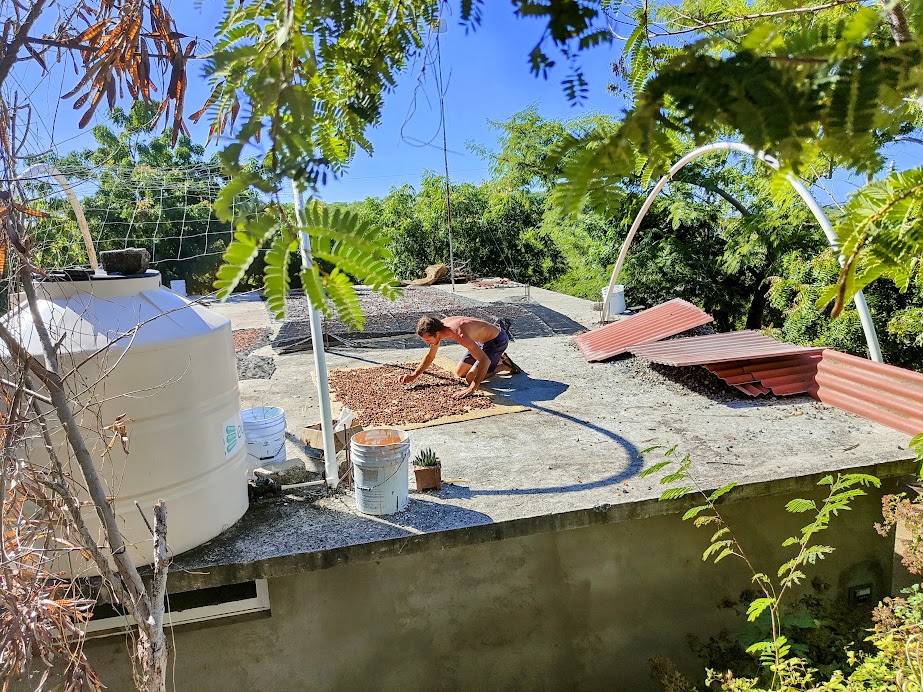
At Arroyo Cruz, everything is done in the family. The beans are dried in the wind and sun on his father-in-law’s roof. By reducing their humidity, the drying process stops the fermentation stage. Paul has to keep a constant eye on the beans, turning them regularly to ensure even drying and prevent the formation of mould. Every evening, they bring them in to avoid moisture from the sea. The drying phase can last from 6 to 7 days.
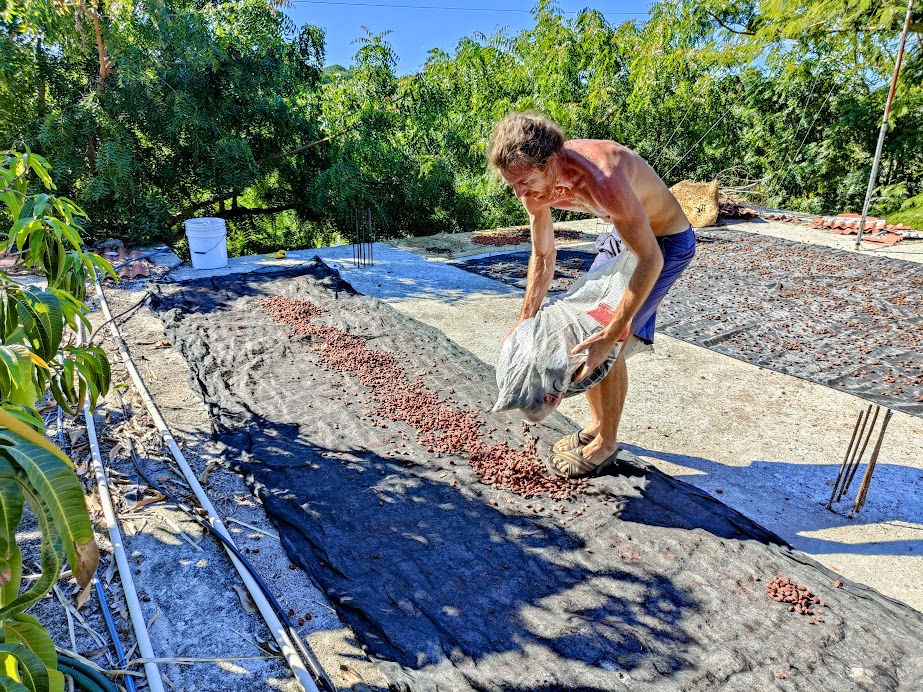
A day in the footsteps of Paul, the chocolate-planter at Arroyo Cruz
“Tasting his chocolate is also tasting this exuberant and generous nature”.
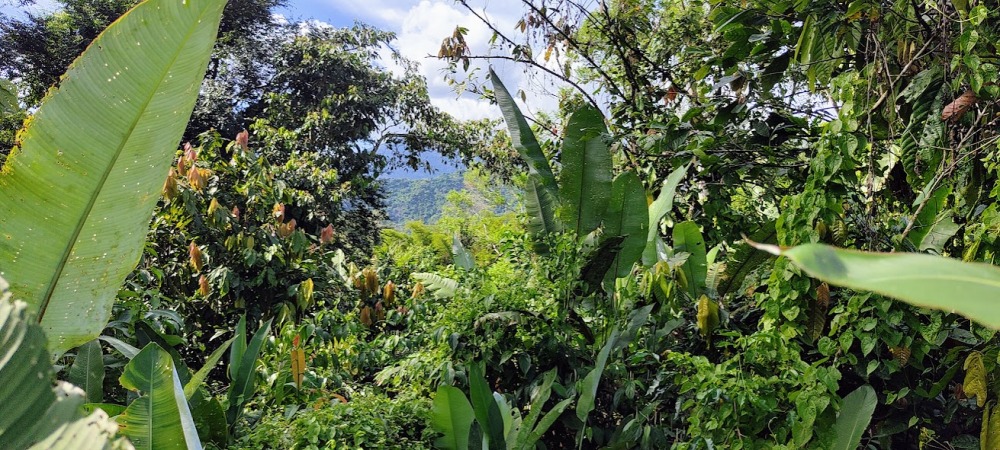
His finca, a hundred hectares or so lost in the Sierra Madre rainforest*.
We were right on time that Wednesday! A day to spend with this whimsical and brilliant chocolatier! We had a much shorter time to go through the whole process of making his chocolate (from cocoa tree to bar). In one of these big twenty-year-old pick-ups, we take the famous carretera 175 which, from Puerto Angel through Pochutla, winds its way up to the state capital, Oaxaca, at an altitude of over 1,500 metres. It passes through the municipalities of Pluma Hidalgo, Candelaria, Lexica, Santa Maria Huatulco, San Miguel del Puerto, San Mateo Piñas, Pochita and Canica. It is in this area of the rainforest that not only cocoa but above all Pluma coffee is grown. One of the best in the world! A quick lunch by the side of the road before turning right at the exit for Candelaria Lexica. From there, it’s a barely passable track to his finca, his pride and joy. In days gone by, this finca (a coffee finca) was in the hands of a wealthy family who had the large entrance house built. What remains are the coffee trees, which Paul also farms.
*A mountain range in southern Mexico that runs parallel to the Pacific coast. It stretches for around a thousand kilometres, between the south of Michoacan and the east of Oaxaca.

He knows every one of his cocoa trees
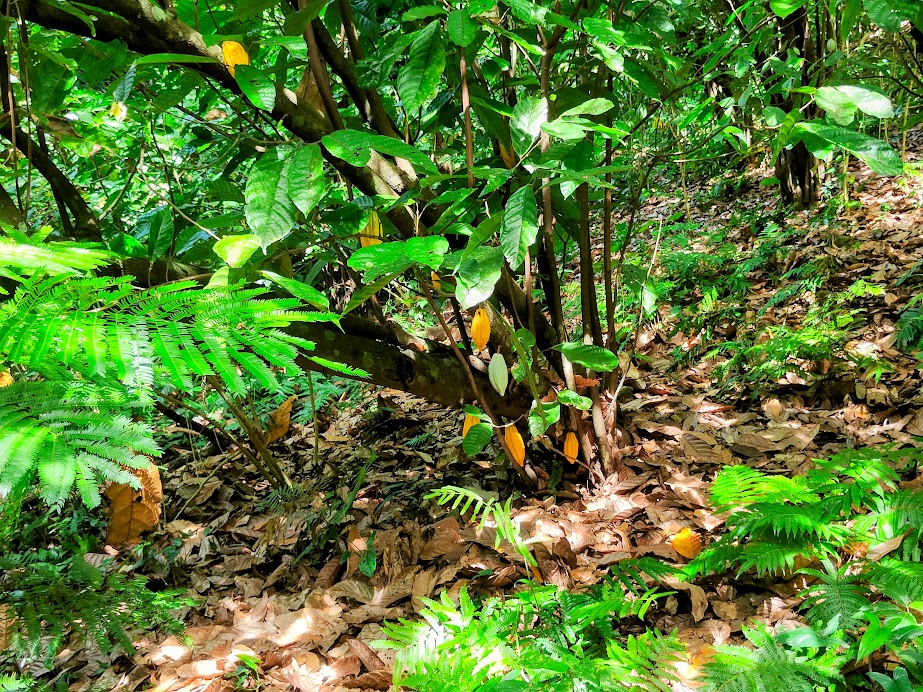
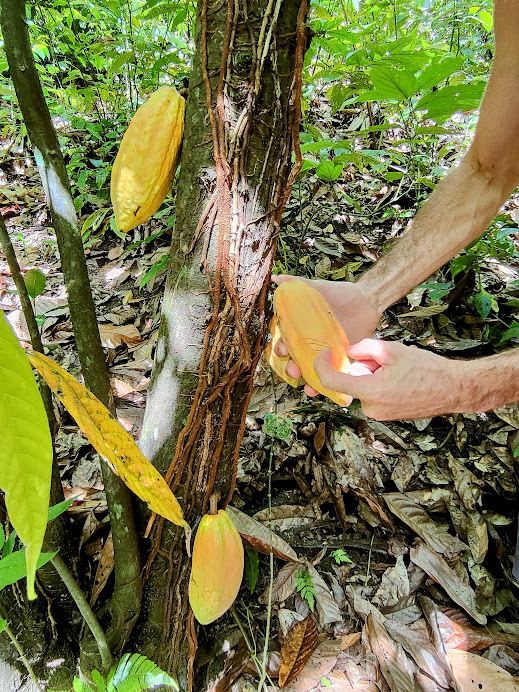
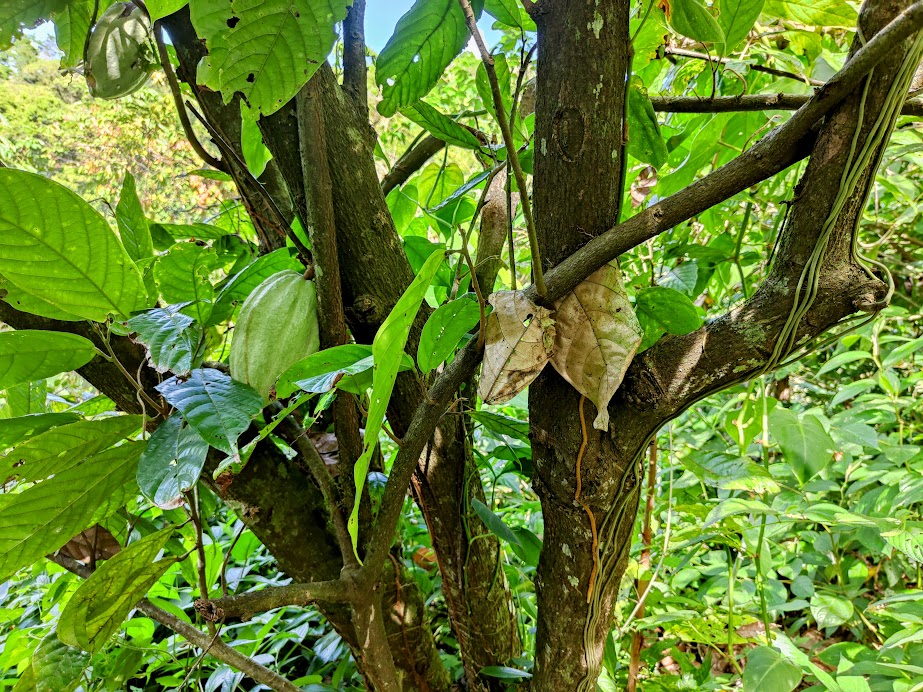
In his finca of around a hundred hectares lost in the mountains in the heart of the tropical forest, he knows the location of all his cocoa trees, his criollos (planted near the arroyo), his forasteros and his trinitarios. He controls their flowering. He knows how best to ward off the diseases and pests that attack his cocoa trees. With him, there are no chemical inputs. To walk with him is to discover the incredible flora that shades his cocoa and coffee trees: lemon, mango, tamarind, banana, orange, sapodilla and others.

The terrible earthquake of 7 September 2017
He likes to ride his motorbike up here to this old coffee finca, of which all that remains is the anachronistic house still protected by railings, as well as a little higher up, an adobe shed. As he slept on the ground floor of the big house, he remembers with fright that apocalyptic night. He was alone on 7 September 2017, when at 11.49pm a violent earthquake shook the entire region. The building was badly shaken, but it held. What could he do to get back to his son and wife, who were living in Zipolite, more than 40 km away, as quickly as possible? No telephone, collapsed roads, unusable bridges. Our man is a daredevil, but a “wise one”. How many times has he escaped death on a motorbike? His technique was to eject from the bike before going under a lorry! He will be in Zipolite in the early hours of the morning to find his family safe and sound.
His arroyo, Paul’s pride and joy
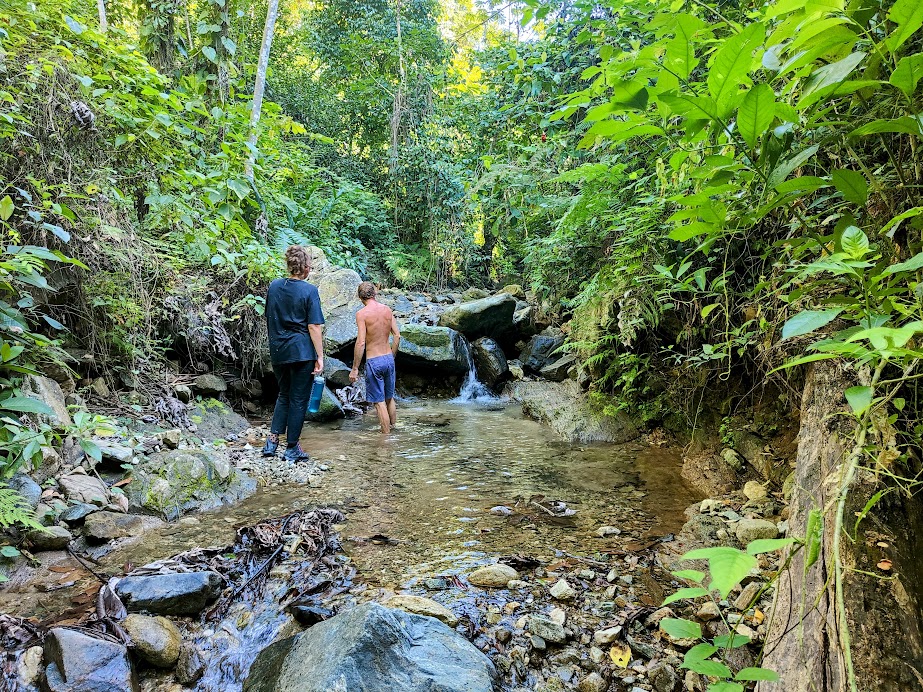
It takes us there. It’s not a torrent at this time of year, but a large stream flowing down the mountain. It’s a tricky climb up through dense vegetation and piles of dead trees. You still have to climb up to the foot of an impressive waterfall, with its gush of huge boulders. Paul stands at the very top, dominating his domain. His joy is obvious. He would later tell us how exceptional his bean harvest had been this year. The proof is that his two young helpers were able to buy themselves a motorbike.


 amazed