When Mexico City welcomed Leon Trotsky, father of the Permanent Revolution
In 1929, Leon Trotsky broke with Stalin. First deported to Siberia*, he was then banished from the USSR and forced into exile*. Nobody fought to take him in. He was the most famous revolutionary of his time, defending the idea of a permanent world revolution and, above all, Stalin’s main enemy. Trotsky was successively expelled from Turkey, Norway and France. Only Mexico agreed to receive him. It was the Mexican painter Diego Rivera, known for his communist convictions, who convinced the government of General Lazaro Cardenas to grant him asylum.
The only condition, not interfere in Mexican politics
The only condition was that he did not interfere in Mexican politics (his security detail came from the United States and Canada). In 1937, he landed at Tampico airport (in the state of Tamaulipas) on the Gulf of Mexico, accompanied by his wife Natalia Sedova and welcomed by the painter Frida Kahlo. The first stage of their exile in Mexico City was the “Casal azul” of the painter couple Diego Rivera-Frida Kahlo in Coyoacán. A falling out led Leon Trotsky to find another place a few streets away, Casa Viena, where he was assassinated in 1940.
*Trotsky is the name of one of his jailers. He had already been deported to Siberia in 1898 as a revolutionary activist at the Odessa Law University. When he escaped, he abandoned his wife Alexandra Sokolovskaya (from whom he never divorced) and his two daughters left behind in Siberia. He took refuge in London under the pseudonym Trotsky (the name of one of his jailers in Odessa).
Garden of Leon Trotsky’s house in Coyoacán
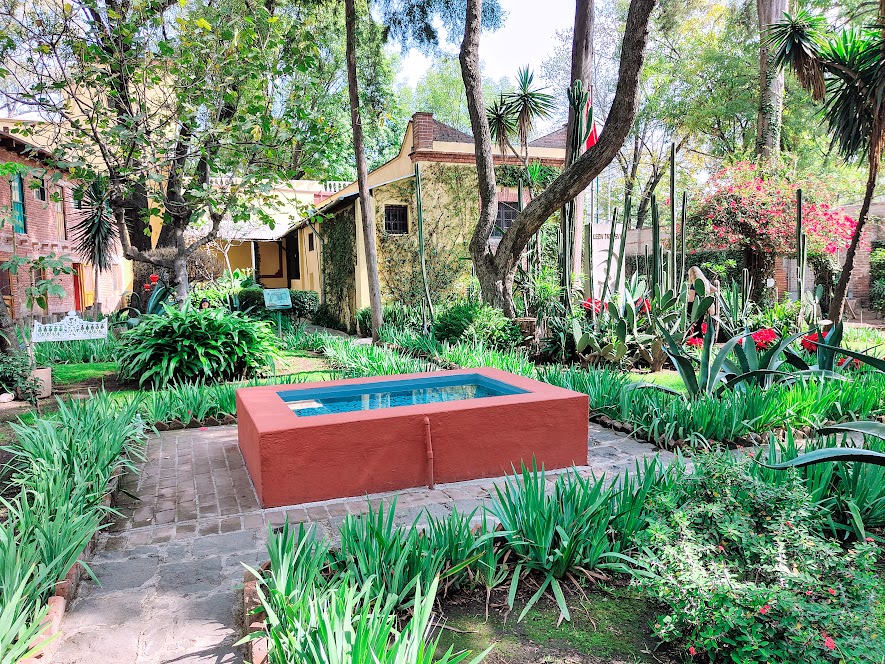
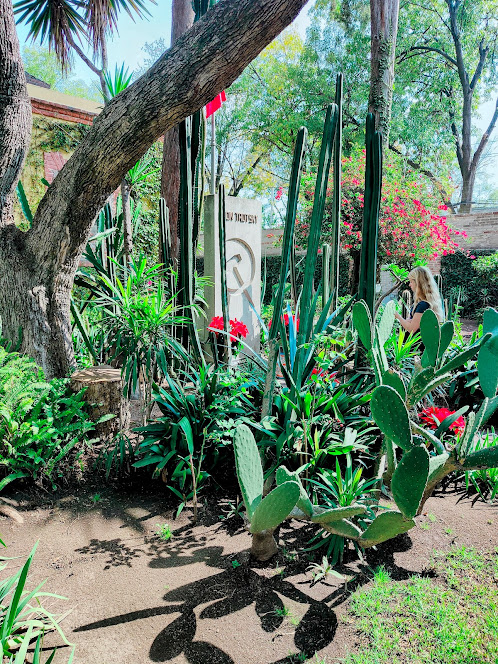
The reality of this assassination would almost be erased by this peaceful garden. It occupies the entire center of the house, with benches, lawns, flowerbeds, trees and, above all, cactuses, Leon Trotsky’s passion. To the side are chicken cages and rabbit hutches. They are a reminder that the master of the house liked to look after them. Opposite, the middle wing was reserved for offices and bedrooms. At the back were the kitchen and dining room. To the side was the living quarters for the armed guards. On the right, the graves of Leon Trotsky, his second wife and, since 2023, his grandson.
Walls and watchtowers surround the house
From the garden, you can see the raised walls and watchtowers that surround the house. It was in this area, guarded day and night, that Trotsky spent the last months of his life, unable to leave because, since the assassination attempt in May 1940, he feared he would be assassinated at any moment.
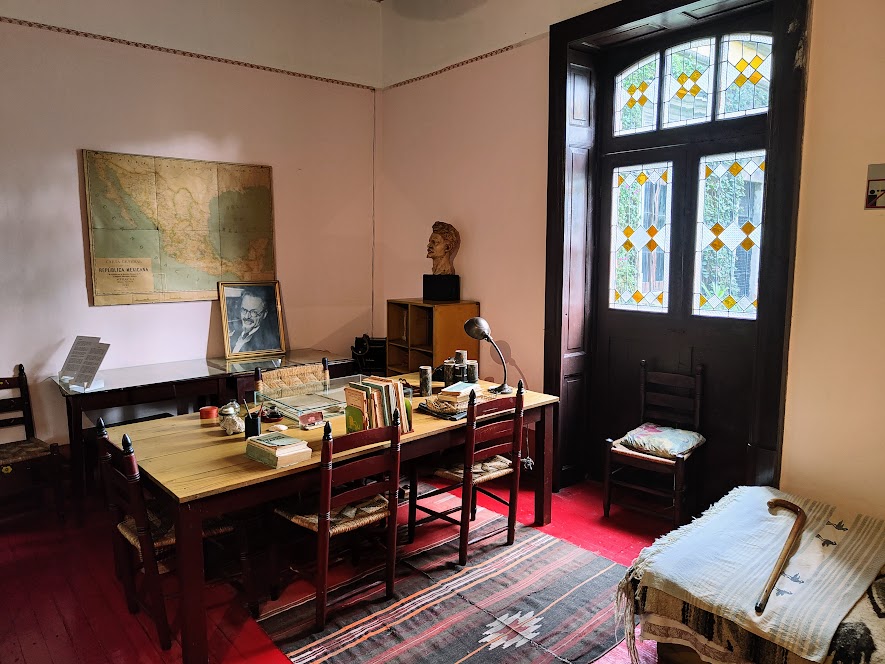
Leon Trotsky’s office, where he was murdered by Ramón Mercader
The buildings and furniture from the 1940s remain as they were. You can see his furniture and personal effects, as Leon Trotsky left them when he died. In the garden of the house is the Russian leader’s tombstone, designed by the architect Juan O’Gorman (who also designed the architecture of the museum at the Maison Atelier of Diego Rivera and Frida Kahlo).
Casa Viena, a museum in memory of Leon Trotsky
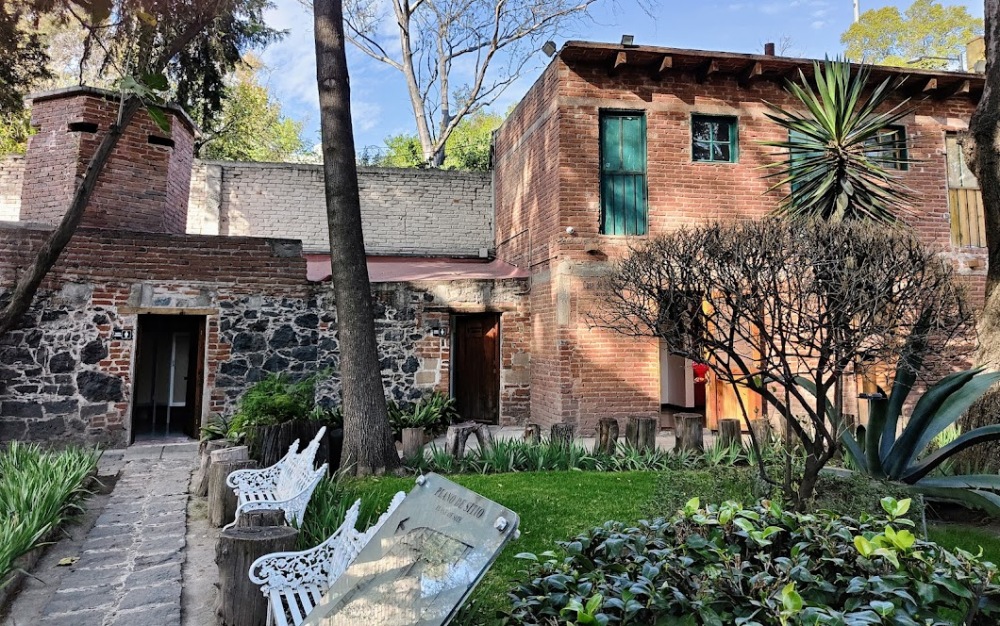
It was here, in the Coyoacán district of Mexico City, in this surprising “Casa Viena”, the place of his Mexican exile, that Leon Trotsky was assassinated on 20 August 1940, his skull smashed in by an ice axe. A diabolical operation ordered by Stalin! He was 60 years old. Since then, Trotsky, born Lev Davidovitch Bronstein in Ukraine on 7 November 1879, hero of the October Revolution, founder of the Red Army and defender of a world revolution, has been buried here. Today, this moving brick house on Calle Viena in Coyoacan, with its colonnades and capitals, where Trotsky spent the last 3 years of his life, is a museum.
The museum founded by Estéban Volkov in memory of his grandfather
It was founded by Estéban Volkov in memory of his grandfather. His only grandson, whom he brought to live with him in 1939, has just died in Mexico City, aged 97 in June 2023. He is the last surviving member of the Trotsky family (his father Platon Ivanovitch Volkov was murdered in the Gulag, his mother Zinaïda Volkova committed suicide and his uncle Lev Sedov was murdered). He was the last witness to Leon Trotsky’s final moments at his home, Casa Viena. He was 13 years old and on his way home from school that day.
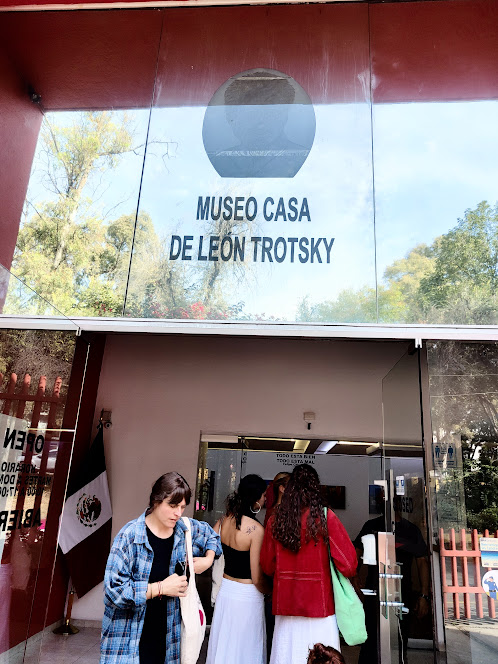
Entering the Casa de Leon Trotsky
10 calle Viena museum (just a few streets from Casa Azul, the Frida-Kahlo museum) and not far from the Universidad metro stop (Indios verdes line), is like entering a haven of coolness and calm (despite the incessant noise of the inner ring road that runs alongside the museum). A modern annex giving access to the museum was built in 1990; a museum dedicated to the memory of Leon Trotsky with a library, galleries displaying photographs and an auditorium in which conferences are held. Trotsky’s house has been listed as a historic monument since 1982. According to the museum staff, Estéban Volkov (Don Estéban), grandson of Léon Trotski, was the founder and soul of the house. “Without his dynamism and character, the museum would have failed in its task. We owe everything we are today as an institution to him.
A house transformed into a fort
The man who, along with Vladimir Ilitch Ulyanov (Lenin) instigators of the Bolshevik uprising of October 1917 rests in the garden of his large brick house, which was turned into a fort for his safety. However, nothing prevented the assassin from entering the house. He was related to the family. Neither the watchtowers, nor the high walls, nor even the armed guards who were supposed to be watching over him day and night.
A commando remotely controlled from Moscow
The bullet holes left two months earlier by a commando remotely controlled from Moscow*, and still visible in the walls of the room, were a grim warning. Trotsky banished from the USSR in 1929, forced into exile and condemned to death by order of Stalin in 1936. The father of the Permanent Revolution “knew perfectly well that he had only been given a respite. Every morning when he got up he would open the window and say to Natalia (his second wife): “They’ve given us one more day of life! Another day of life! The question was, where would the next attack come from? ” recalled his grandson, Esteban (Sieva) Volkov, the only survivor of a family decimated by Stalin’s will.
*Attack organised by the Mexican Communist painter Alfredo Siqueiros with the help of Communist militants disguised as policemen. Trotsky and his wife escaped unharmed. There was only one victim, Trotsky’s grandson Estéban. As his bed was being shot at, he threw himself to the ground, curled up in a ball in a corner but couldn’t dodge a bullet that hit him in the toe. What a thumbing of the nose at history! Alfredo Siqueiros, a fervent supporter of Stalin, was awarded the Lenin Peace Prize in 1966 for this and other “feats of arms”.
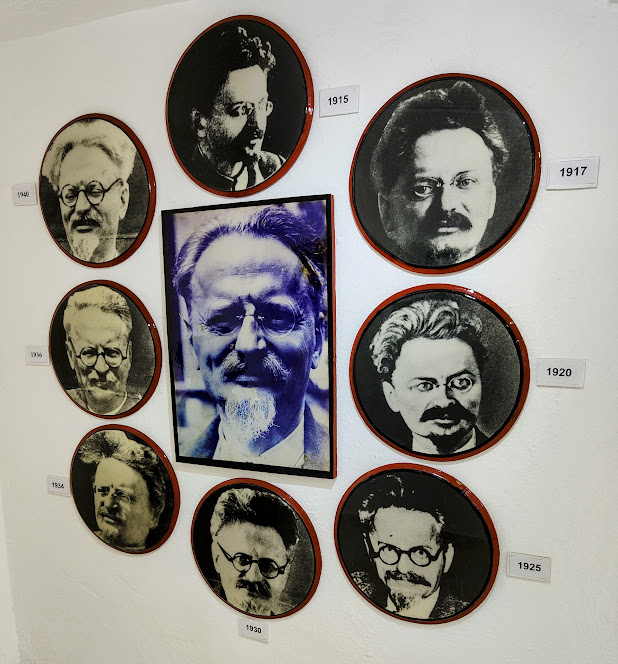
Leon Trotsky and 9 portraits from 1915 to 1940
9 portraits of the Bolshevik leader, founder in 1938 of the Fourth International (Trotskyist communist organisation against Stalinism). In fact, the term “Trotskyite” was first used as an insult by Grigory Zinoviev and then taken up by Stalin. On the one hand, there was the “permanent revolution” supported by Trotsky and, on the other, the “revolution of a single country”. In 1923, Zinoviev joined forces with Lev Kamenev and Joseph Stalin to form a troika with the aim of marginalising Leon Trotsky. Leon Trotsky Museum in Coyoacán.
The emblematic sickle-and-hammer figure of the father of the Russian Revolution
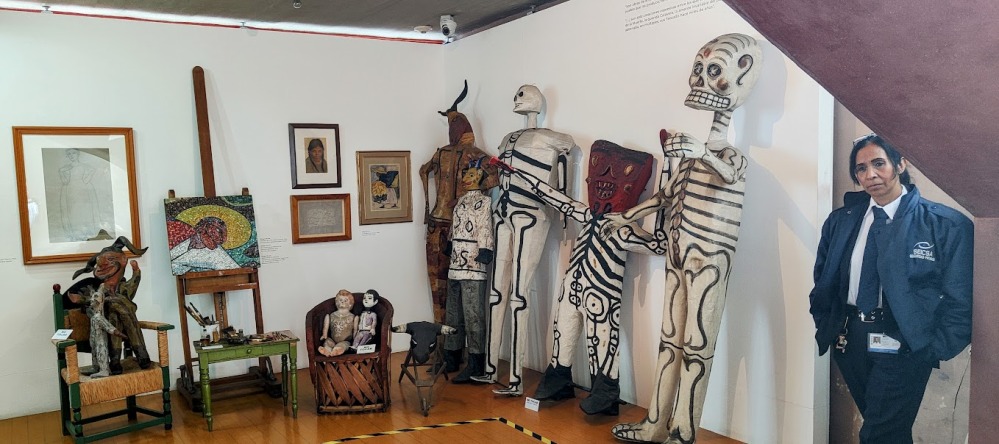
Leon Trotsky, is honoured here in his house on Calle Viena during Dia de los Muertos, in early November, marked by extravagant colours and representations of paper skulls. The centrepiece of this UNESCO-recognised festival is an altar, or ofrenda, as seen here, with offerings of water, food, pan de muerto, photos, books about the deceased, etc. According to the French writer André Breton, a friend of Trotsky, the calaveras, these smiling skulls, are the “power to reconcile life and death”, indisputable proof of the revolutionary art of surrealism in Mexico.

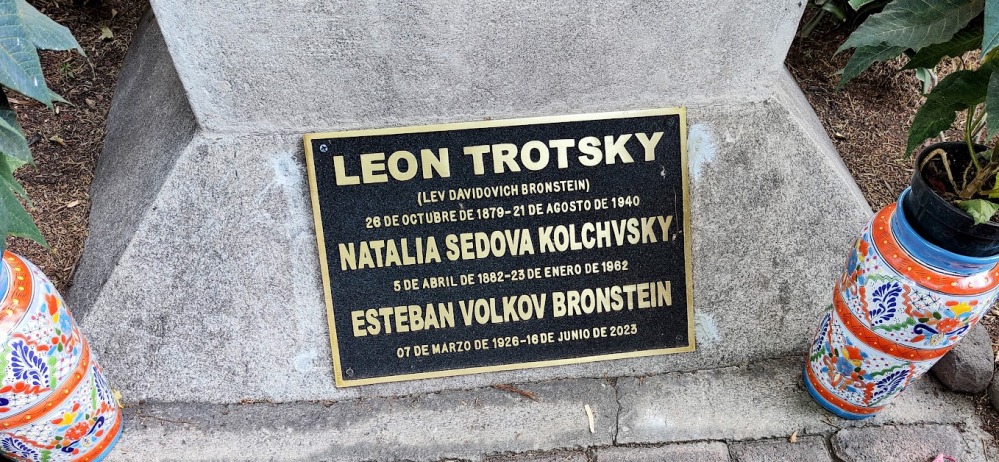
In the same grave, the grandparents and the grandson who joined them in 2023.
Natalia Sedova, the “political” grandmother of Leon Trotsky’s grandson
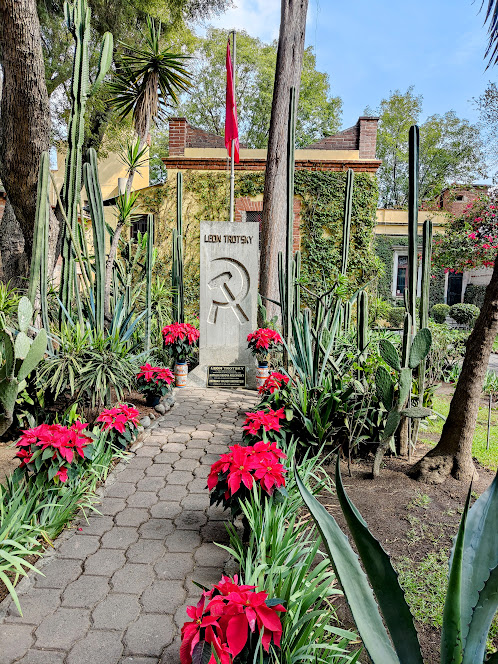
In the garden, at the foot of a flagpole flying the red flag, stands a grey stele at the end of an avenue of flowers and cacti. A simple name, Leon Trotsky, with a sickle and hammer. At his side is his wife, Natalia Sedova. He had met her in Paris in 1902. She was 22, he 23, and they never left each other’s side. They had two children: Lev Sedov (1906-1938) and Sergei Dedov (1908-1937). She died aged 79 in 1962 in the Paris suburbs. It was she who, in May 1940, a few months before Trotsky’s assassination, during the first attempt on his life at their house in Coyoacán, saved him from the machine-gun fire of Stalin’s henchmen by throwing herself on top of him.
“All my family and our relatives were exterminated by Stalin”
The French writer André Breton said of Natalia Sedova that she could be compared to “the greatest figures of Antiquity”. She lived here, in this house, for around twenty years until her death. In 2023, Vsevolod (Sieva) Volkov, the only grandson of Leon Trotsky nicknamed Estéban, born in 1926 in Yalta in the Crimea (he had forgotten the Russian of his childhood and communicated with his grandparents only in French), joined his grandfather and the woman he affectionately called his political grandmother in their graves.
Estéban owed his life to a gesture from Stalin
He owed his life to a gesture from Stalin. The dictator had allowed his mother*, one of Trotsky’s two daughters, to flee with just one of her children (she left her daughter Alexandra behind). “All my family and our relatives were exterminated by Stalin”, he said.
* Estéban’s mother, Zinaïda Volkova, who had gone to Berlin to treat tuberculosis (at the time of the rise of Nazism), was driven to suicide in 1933, probably by an agent of the GPU (forerunner of the KGB). Her father, who remained in the USSR, was deported by Stalin and executed. Estéban, orphaned in 1935, was taken in by Lev Sedov, one of Trotsky’s sons in Paris. He lived there with his companion Jeanne Martin. In 1939 Trotsky obtained custody of Estéban in Mexico.
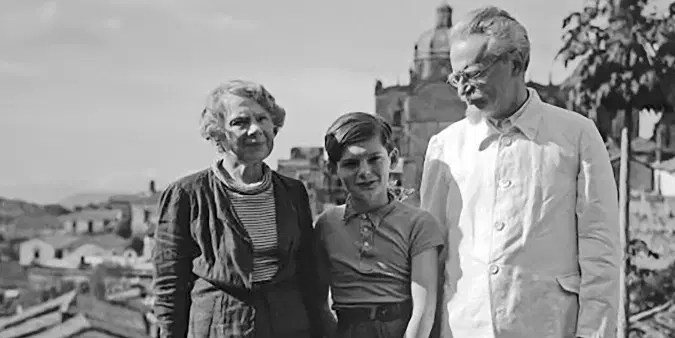
The journey of an exile
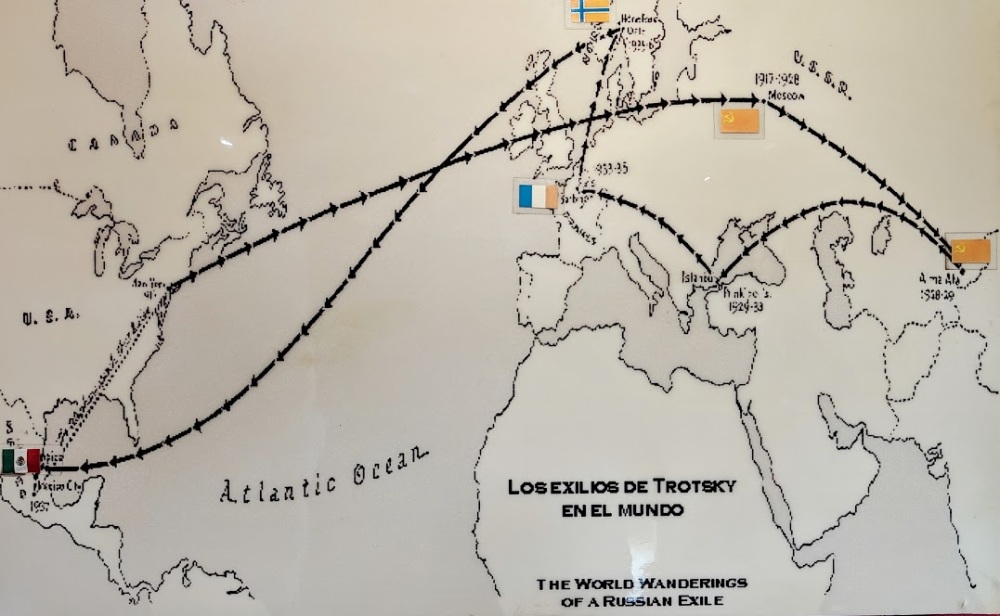
Leon Trotsky and his three years in exile in Mexico City (Coyoacán).
With Diego Rivera and Frida Kahlo
When he arrived in Mexico with his wife, Natalia Sedova, in January 1937, Trotsky stayed with the two avant-garde painters, Diego Rivera and Frida Kahlo, at their Casa Azul in Coyoacán. This “Casa azul” was the meeting place for all intellectuals in search of revolutionary anointing (in 1936, Rivera had joined the Mexican section of the Fourth International). During his stay Trotsky met the French poet André Breton*. “Mexico tends to be the surrealist place par excellence”, he declared on his arrival in Mexico City in April 1938.
André Breton tore off a few ex-votos
He saw it as the raw material of Surrealism wherever he went. He stayed for four months with his hosts, Diego Rivera and Frida Kalho. It was there that he wrote his Manifesto for an Independent Revolutionary Art. During a visit to Cholula (near Puebla), which he made in the company of Léon Trotski to the Sanctuary of the Virgin at the top of the Great Pyramid, “Breton was seized with such enthusiasm for the Mexican Baroque and its Aztec accents that, before the horrified eyes of his companion, he tore off a few ex-votos and hid them under his jacket to take them back to France”.
*In 1939, André Breton offered to organize an exhibition for Frida Kahlo in Paris. But nothing was ready when he arrived. In the end, Marcel Duchamp took on the Mexican theme. She had very bad memories of both the Surrealists and France.
Into the home of Frida Kahlo (her childhood home) and Diego Rivera
When the Trotsky couple arrived in Mexico, they were welcomed into the home of Frida Kahlo (her childhood home) and Diego Rivera, whom she had married in 1931. This is now the Frida Kahlo Museum (Casa Azul), known as the Blue House because of its cobalt-blue exterior walls. It is located in the Colonia Del Carmen district of Coyoacán in Mexico City. It is one of Mexico’s best-known and most-visited museums, welcoming around 25,000 visitors a month. Please note! Reservations must be made online, and the museum is often fully booked. From here, it’s a ten-minute walk to the Leon Trotsky house and museum on Calle Viena.
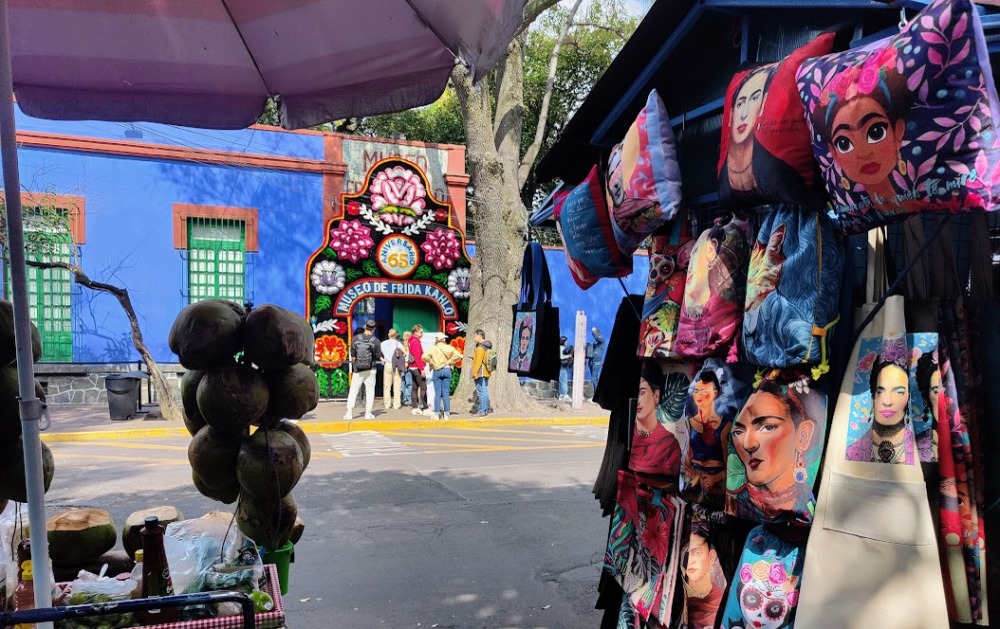
The Museo Casa Estudio Diego Rivera y Frida Kalho
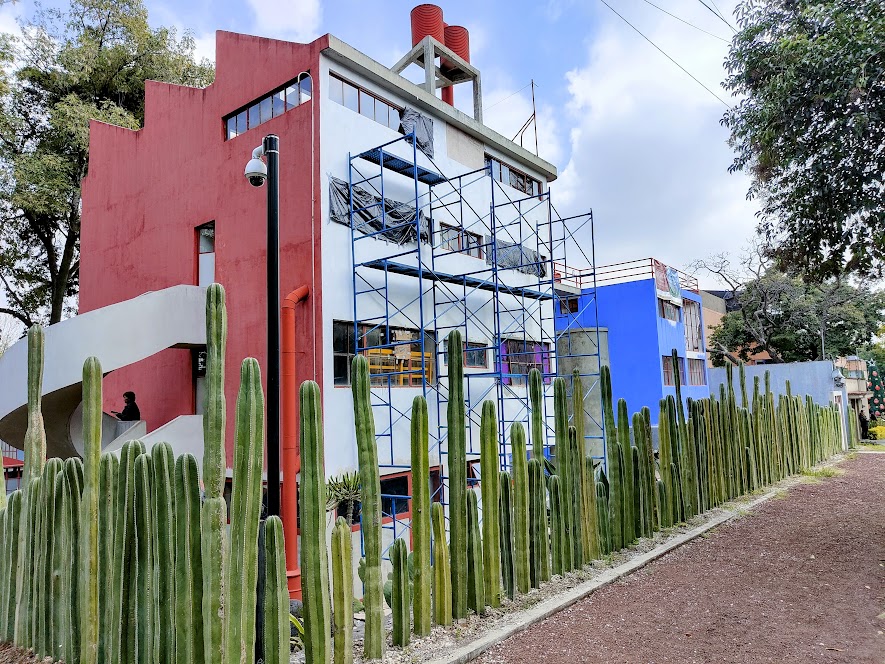
In the hills above Coyoacán, the Museo Casa Estudio Diego Rivera y Frida Kalho. A decisive monument in the history of twentieth-century Mexican architecture. It was strongly inspired by the architect Le Corbusier, but was designed by Juan O’Gorman. Diego Rivera and Frida Kahlo lived there from 1934 to 1940. Leon Trotsky and Natalia Sedova probably also stayed here. This avant-garde complex comprises two buildings linked by a footbridge: one housed Frida Kahlo’s studio (blue), the other Diego Rivera’s (garnet pink). At the end of 2023, the building was being restored.
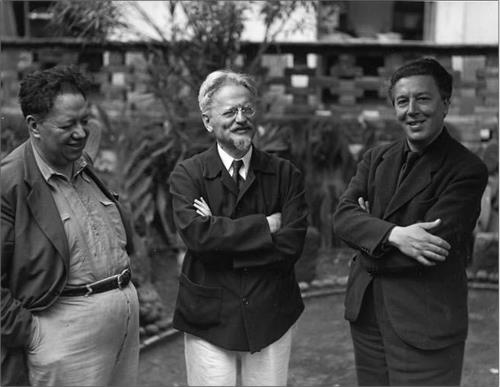
The falling out: a flirtation between Frida Kahlo and Leon Trotsky or a misunderstanding?
There was talk of a little fling between Frida Kahlo and Leon Trotsky; of Frida’s habit of using the American word “love” at every turn, which exasperated Diego Rivera. It has also been said that these two exchanged books containing “little words”. More prosaically, according to Estéban Volkov, Trotsky’s grandson, the quarrel stemmed from a misunderstanding.
He thought that Trotsky had ousted him
A magazine had been created by young Trotskyists. Diego Rivera was not its director. He thought that Trotsky had ousted him. So he wrote to André Breton to complain. A copy of the letter was read by Natalia, etc. Relations between Diego Rivera and Leon Trotsky became strained. In fact, living together had become too much of a burden.

Leon Trotsky, the revolutionary man of letters
Trotsky was a hard worker. In Mexico alone, after his two bestsellers The Permanent Revolution (1931) and History of the Russian Revolution (1932-1933), he wrote three other works that took up a good part of his time. In fact, he lived partly on his royalties. His ultimate aim is to refute the responsibility for the crimes attributed to him by Stalin, who sentenced him to death in absentia.

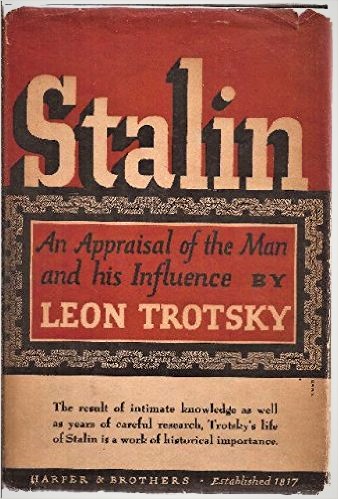
How ironic that Trotsky’s last book was a biography of Stalin!
Back in 1933, Leon Trotsky, who was living in Barbizon at the time, decided to write a biography of Lenin. After arriving in Mexico in 1937, he resumed the project, which was interrupted by the departure of his Russian typist. A change of project! In 1938, the American publisher Harper and Brothers suggested he write a biography of Stalin (which would sell better!). When Trotsky was assassinated in August 1940, the manuscript was already so far advanced that the American translator, who was in constant contact with Trotsky, had already started work on it. At the end of 1941, the American edition of Trotsky’s Stalin was published by Harper and Brothers.
The last book written by Leon Trotsky stopped dead in its tracks (Pearl Harbor)
But its distribution was stopped dead in its tracks. It was Pearl Harbor on 7 December 1941. The Soviets put pressure on the American government to halt distribution of the book. The situation had indeed changed. Since the German invasion a few months earlier, Stalin had become an ally. For the record, only one copy of Leon Trotsky’s Stalin has leaked. It is deposited in the United States Library of Congress in Washington. It was not until March 1946 and the end of the war that Harper and Brothers finally put the book on sale. Two years later, the book was published in French by Bernard Grasset.
“Stalin”, the last book written by Leon Trotsky
The last book written by Leon Trotsky in his house on Calle Viena, a biography of Stalin. Assassinated in August 1940, Trotsky was unable to complete it. The American publisher brought out the book in December 1941. It was withdrawn under Soviet pressure after the Pearl Harbor disaster. Stalin had become an American ally.
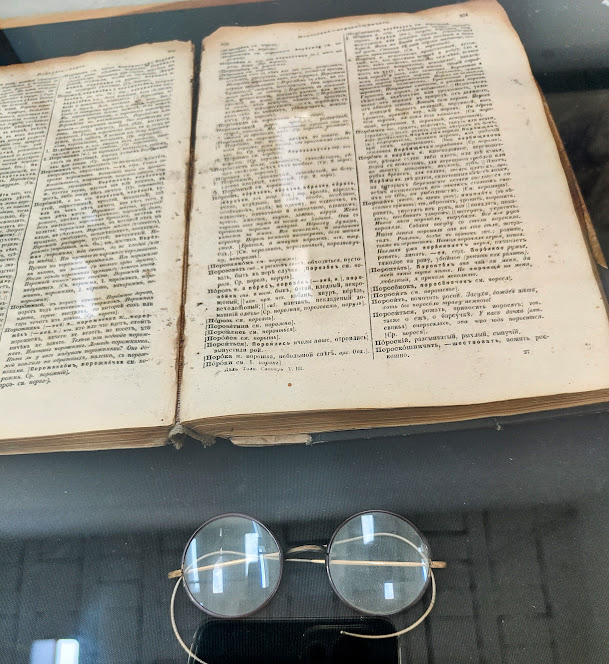
Trotsky in the privacy of his house on Calle Viena
Trotsky was an early riser. He worked non-stop and spent most of his days writing. In the evenings, his only physical exercise was to go out and feed his chickens and rabbits. He was also very keen to provide political education for the comrades who had joined him, particularly the North Americans from the Socialist Workers Party (SWP) (an American Trotkist political party founded in early 1938), and the journalists requesting interviews. In this lively house, he was nicknamed “The Old Man”, especially his bodyguards, most of whom came from the United States.


The man who loved cacti
Nothing could be truer than the memories of a child who came to live with his grandfather in 1939 in Coyoacán. He recounts picnics or excursions outside Mexico City to Taxco in the north of the state of Guerrero or to the state of Hidalgo, just a few hours away. Leon Trotsky had developed a passion for cacti, a type of cactus called Espostoa, whose distinctive feature is that it is almost covered in hair. Just imagine his grandfather and young Estéban Volkov (aged 13) picking up these baby cacti to replant them in the Calle Viena garden, like real hunting trophies!
On 20 August 1940, Leon Trotsky was assassinated in his office in Coyoacán
A diabolical trap laid by Stalin’s services
Leon Trotsky, a major architect of the Bolshevik revolution, was to pay for his opposition to Stalin with his life. For the master of the Kremlin, it had become an obsession. He had to be eliminated at all costs. The Fourth International, the international communist organisation founded in 1938 by Trotsky, directly challenged him. The exile had become a free electron, all the more dangerous because he was outside the USSR. His books and articles written in exile described Stalin as Hitler’s steward, while condemning the cult of personality, totalitarianism and, above all, bureaucracy. For Stalin, this comparison between the USSR and Nazi Germany was unbearable.
“Trotsky must be eliminated within the year” (Stalin)
The orders given by Stalin to Pavel Soudoplatov, an officer in the NKVD (head of the administration of special missions in charge of sabotage, kidnappings and assassinations) and named as the main organiser of Trotsky’s assassination were clear: “Trotsky must be eliminated within a year before the inevitable war breaks out (the invasion of the Soviet Union dates from June 1941).
The attack forced the couple to tighten security
Without the elimination of Trotsky, as the Spanish experience shows, we cannot be sure that in the event of an imperialist attack on the Soviet Union, our comrades-in-arms in the international communist movement will support us”. A first assassination attempt on 24 May 1940 failed. Trotsky, his wife Natalia and their grandson Estéban miraculously escaped the killers’ machine-gun fire alive. The attack forced the couple to tighten security, to stop going out and to trust only those very close to them. And that’s when the (unstoppable) trap closes on the man who, against Stalin, was Lenin’s unfailing ally*.
*The centenary of his death is being celebrated (very, very discreetly!) in 2024.
His assassin, a family friend
This first failure made Stalin hysterical! Soudoplatov and Beria are summoned. They had a plan B. To carry it out, Pavel Soudoplatov had set his sights on a young Spanish Communist: Ramón Mercader (1913-1978), alias the Belgian Jacques Mornard. He was a veteran of the Spanish Civil War. He was recruited in 1937 through his mother* (a domineering mother), herself an agent of the NKVD (political police, forerunner of the KGB) and the mistress of his handler. His mission: to become a friend of the revolutionary in exile in Mexico. Ramón Mercader’s father came from a wealthy Catalan family and his mother from the Cuban aristocracy.
His mother and he shared a real devotion to Stalin
His mother and he shared a real devotion to Stalin. He was trained to become a secret agent. His charm was an obvious weapon. Everything was planned, not least the meeting in 1939 in a Paris hotel with the woman who would enable him to get close to Leon Trotsky. Mercader presented himself as a young journalist (but with a false Canadian passport in the name of Frank Jackson) when he met Sylvia Ageloff (1910-1995). She was an American, a young social worker from Brooklyn. She was active in the Trotskyist Socialist Workers Party. She immediately fell under the spell of this handsome, cultured young man, 3 years her junior.
*Caridad Mercader, Ramón’s mother and a committed Stalinist. she took him into the group led by NKVD general Leonid Kotov. On 20 August 1940, it was she who was to wait in the car outside Trotsky’s house in Calle Viena for her son after the assassination. They were supposed to escape together according to a pre-arranged itinerary, first to California, then by boat to Vladivostok and by Trans-Siberian Railway to Moscow. She had to make the journey without her son in the company of General Kotov.
Operation ‘Duck’ mounted by the NKVD
In October 1939, the Jackson-Ageloff couple were in Mexico City. Their aim was to penetrate the inner circle around Leon Trotsky. According to the plans, they were part of the second team led by Naoum Eitingon, a former NKVD deputy agent in Spain (alias Leonid Kotov) under the orders of General Orlov. This was Operation Duck. Estéban Volkof, Leon Trotsky’s grandson, said of this Franck Jackson (Ramón Mercader): “He was a very correct, elegant, very likeable man…
He was a very correct, elegant, very likeable man
“… His strategy was precisely not to show any interest in getting to know Trotsky. He was always around the house, doing small favours for comrades and secretaries and taking them out to eat in good restaurants”. This confidence-building worked like a charm Estéban remembers the picnics he used to organise around Mexico City: “We used to go for walks with him in the mountains. He even drove some friends as far as Veracruz, 400 km from here”.
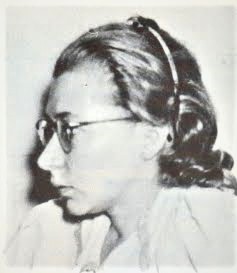
Sylvia Ageloff was not so naive!
Contrary to what has been claimed, Sylvia Ageloff was not the naive young girl people like to portray her as. For Leon Trotsky’s protection, she even avoided going with Mercader when she visited Calle Viena. It was she who warned Trotsky about the false passport of her companion, Frank Jackson. But Jackson’s concern paid off.
As a so-called journalist
As a so-called journalist, he was finally able to approach Trotsky. On 20 August 1940, Franck Jackson obtained a meeting with Trotsky so that he could correct one of his articles. “How could I refuse to do this new friend a little favour? That’s how he got into his office. Trotsky fell into the trap.
Execution by ice axe
Trotsky was not at all suspicious. Haven’t they crossed paths at least a dozen times and even recently had tea together? As “the old revolutionary” began to work on the text, Franck Jackson (Mercader) picked up the ice axe. He had hidden it under his gabardine. A gabardine in the middle of summer without arousing suspicion! Only Natalia was surprised. With a blow that would prove fatal, he plunged it into the back of Trotsky’s skull. But Trotsky managed to crawl into the next room and call his guards.
They made me do it
We have the testimony of one of them, Joe Hansen, who was the first to enter Trotsky’s office. He describes a sobbing assassin, frantically stammering: “They made me do it”. Other witnesses say that Trotsky spat on Mercader. He began to struggle, breaking Mercader’s hand. It is also said that Trotsky prevented his guards from killing the assassin so that he could confess the names of those who had ordered the killing.
The testimony of Estéban Volkov, Trotsky’s grandson
Estéban Volkov’s account is far more poignant: “I was walking home from school in the afternoon, it was a hot summer’s day. From a distance I saw that something strange was happening went past our house. There were policemen, there was a commotion, it made me anxious. I quickened my pace and went inside. The first thing I saw was one of the secretaries, very nervous, holding a pistol. I asked him what was going on. His only reply was: “Jackson, Jackson (Ramón Mercader)!
Keep my grandson away, he mustn’t see this
In a corner, I saw Jackson with blood all over his face, beaten by policemen and comrades. He was moaning like an animal, I’d never seen anyone in such a state. Through a half-open door, I saw my grandfather on the floor, his face all bloody. Natalia was putting ice on his head. I found out later that when he heard my footsteps in the library, he managed to say: “Keep my grandson away, he mustn’t see this. It has always been difficult for me to recount this episode”. Trotsky died in hospital the next day. Ramón Mercader injured by Leon Trotsky’s guards during his arrest. He identified himself as Jacques Mornard. He was sentenced on 16 May 1944 to 20 years in prison and 3,485 pesos. He gave no indication of the truth. Nor did he ever explain why he had committed the crime.
20 years in prison for Trotsky’s assassin
Mexico City, Moscow, Havana
The murderer was sentenced to 20 years in prison, the maximum penalty under Mexican law. He told the police that his name was Jacques Mornard (or Ramón López). It took the police 10 years to discover his true identity and they were unable to prove formally that he was acting on orders from the NKVD. So did this Mercader/Mornard/Jackson/Lopez feel the slightest regret after this assassination ordered by Stalin? Many would like to think so.
Moscow never abandoned Ramón to his fate
According to his brother, Luis Mercader, Moscow never abandoned Ramón to his fate. He had access to the best lawyers in his defence. A support committee was even set up. Throughout his years of incarceration, a woman was hired to prepare lunch for him at home, which she brought to his cell. Ramón married his daughter (an Indian) in prison. He had a library, a radio and daily newspapers. He was a passionate reader. He became a true scholar.
Fidel Castro’s personal guest
The return to Moscow in 1960 was a great disappointment. Soviet reality was much less flamboyant than he had imagined during his 20 years in prison. He was given a very modest flat, which he shared with Roquelia, whom he had married in prison. Far from being treated as a hero, he was discreetly awarded the Order of Lenin under an assumed name, Ramon Ivanovitch Lopez, for having (on his own initiative!) eliminated an enemy of socialism.
Castro gave him a villa surrounded by a garden
After 14 years of pleading to go to Cuba (his mother’s country), he was finally given the opportunity. Fidel Castro welcomed him like a hero. He gave him a villa surrounded by a garden. Ramón became Fidel’s personal guest. He regained a taste for life. He was even able to return to work as an adviser to the Ministry of Internal Affairs. He died of bone cancer on 18 October 1978, aged 65. His ashes were laid to rest in the Kountsevo cemetery in Moscow, under the name “Ramon Ivanovitch Lopez, hero of the Soviet Union”.
Don Estéban in his grandfather’s house
The house in Coyoacán, calle Viena, has remained untouched (buildings and furnishings) since August 1940, when Leon Trotsky was assassinated in his office by Ramón Mercader. What we see today is a house that was fortified after the first attack in May 1940. Estéban Volkov*, who died aged 97 in 2023, was the last living witness to his grandfather’s assassination. “I lived in this house until 1970”, he said. At that time, the Mexican president requisitioned Trotsky’s house for a few months out of fear of the Trotskyite activism then rife in Mexican universities. But realistically, he realised that it was impossible to destroy what was considered a historic building.
The house listed as a historic monument
The house was listed as a historic monument in 1982. What can you do with it but return it to the family? In 1982, the house was declared a Historic Monument by President José López Portillo. Estéban was responsible for maintaining the house, which he had lived in since my grandmother died in 1962: “I lived there with my family. My four daughters were very happy here”. In 1989, when he retired, he founded the Museo Casa de Leon Trotski, which he curated until his death. In 1990, he created a modern annex housing a museum dedicated to the memory of Leon Trotsky, with a library, a gallery and an auditorium in which conferences are held.
*Estéban had a career as a chemist. He was one of the promoters who developed the industrial production of the contraceptive pill in Mexico. He married the fashion designer Palmira Fernández (who died in 1997). He had 4 daughters, Verónica (1955), Nora (1956) and twins Natalia and Patricia (1957).
Estéban Volkov criticised “Trotsky” the eight-episode series on Netflix
Estéban Volkov defended his grandfather’s memory. So he criticised “Trotsky”, the eight-episode series directed by Alexander Kott and Konstantin Statsky, on Netflix in 2017. The series was financed by the Russians and its content was anti-Trotsky and anti-Semitic. On the plus side, it attracted an incredible number of visitors to the museum.


Entrance to the museum of the House of Leon Trotsky
The museum 10, calle Viena (or Río Churubusco 410) in Coyoacán. Just walk through the museum into Leon Trotsky’s garden and house. In 1990, to mark the 50th anniversary of his assassination, Estéban Volkov, Leon Trotsky’s grandson, set up the Leon Trotsky Museum and the Institute for Asylum Law and Civil Liberties, located next door (Instituto del Derecho de Asilo – Museo Casa de León). The museum receives over 100,000 visitors a year. It is supported solely by ticket sales and donations.

 amazed